Morris Misel · planning 2027 · the foreseeable future

How do you plan next year when you can’t be sure what’s coming?

“I plan a year ahead, sometimes longer, and so do my clients.”

You pick where you're heading, look at what's already on its way, and choose a few first steps with a name and a date. The hour version takes five worksheets, and there's a finished example you can read first.

Want to hear how I think first? Come to my free session online on Thursday 19 November.

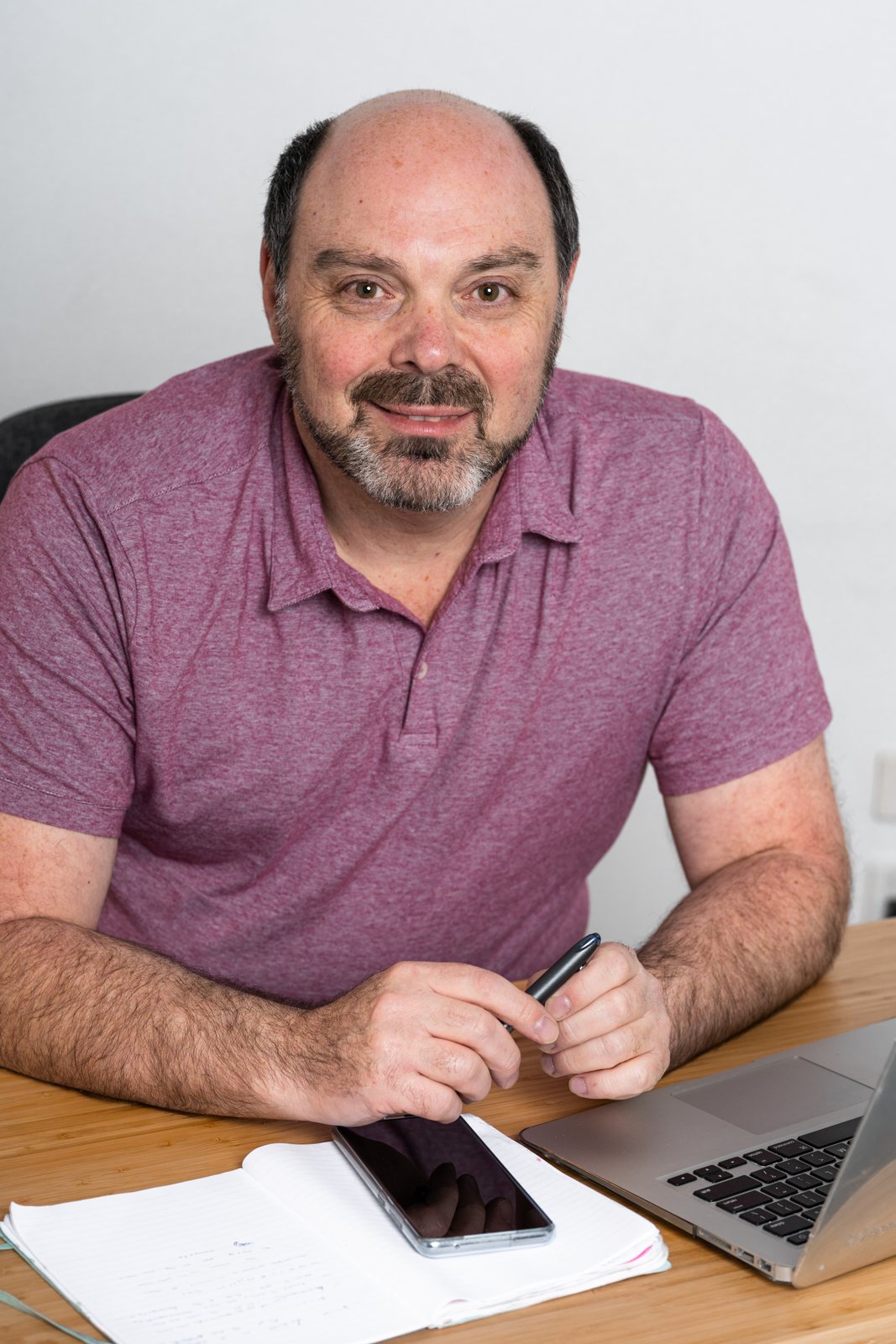
Morris Misel at his desk with a notebook and laptop, smiling

Thirty years of foresight. Thousands of clients, 2,800+ keynotes and workshops, 160 industries, 25 countries, and heard by more than a million people a year, on stage and in the media.

Some of the organisations I've worked with

  • NAB
  • IBM
  • Mastercard
  • ANZ
  • Allianz
  • EY
  • UBS
  • RMIT University
  • Visa
  • Bupa
  • Lufthansa
  • Deakin University

Heard and seen on

“I learnt more in 90 minutes about my future, myself, my business and what I really need to do to move forward than I have in the past five years.”

Hamish Macqueen, Director, Cleancorp (NSW)

Planning when nothing holds still

How do I plan next year when I can't be sure what's coming?

I'd start with where you're heading, have a look at what's already on its way, and from there pick a few first steps you can take now. The route will zigzag, and that's fine, because you've already chosen where it ends.

I think of it as dinner at Mum's. Mum's table is where you're heading. The red lights and roadworks on the way are everything you can't control. What you do is ring Mum, say you'll be a bit late, and take a different road.

A decision you make at ten o'clock might not hold up by two. Where you're heading does, and I pre-think as much as I can so that when I get to something I can just do it.

That's the order of my guide, Before the Year Turns: where you're heading first, then what's in the way, then what you do now.

Planning for uncertainty, in time

How far ahead should I plan?

A year at least, and further where something is already dated. I plan a year ahead, sometimes longer, and so do my clients.

The foreseeable future has no set length. The part of it you can see is whatever has already started: a lease ending, a rule starting, a competitor's sign going up in the shopping centre. So I don't ask what's going to happen in 2027. I ask what's already started that hasn't reached us yet.

My guide sorts each thing you spot into one of four stretches: now, which is the next twelve months, then next at one to two years, after next at two to five, and beyond. Each one gets a place, along with where you saw it and when.

Plenty of us stop at twelve months. In June I wrote about a report where roughly 85 per cent of the people surveyed said their organisations were prepared for big shifts, and fewer than half had strategic plans reaching past twelve months.

The hour version, on one page

What belongs in a 12-month plan?

It fits on one page, in six parts: where you're heading, your numbers and the one to watch, what you're stopping, your first steps, what you're deliberately waiting on, and when you'll look again.

Leah runs a café with two shops and nine staff, and I've made her up, numbers and all, so you can see what a finished set looks like. She fills in the worksheets the way a busy owner fills in a form at the end of a long day, and the six rows the hour version fills in come out like this.

A worked example · Leah is made up, and so is every number

Planning across the foreseeable future, one café

Leah doesn't know what 2027 will bring, but she does know what's already dated and what that's likely to set off, so she's picked what to do first.

What's already on her calendar

Paid parking on the main street from March. A yes or no on the station shop lease by 31 March. A chain café opening in the station shopping centre in April.

Leah's Worksheet 5, what's already arriving

What the chain café sets off

First, commuters try the chain and her mornings drop. Second, fewer morning shifts, so her casuals lose hours and start looking around, and the landlord wants more rent when the lease comes up. Third, she can be the café that knows your name, and let regulars order ahead by text.

Leah's Worksheet 6A, ripples

Three ways the year could go

Going card-only works in all three, so she goes, after a trial at the station. Renewing the lease for five years is fine in a normal year and risky in the other two, so she asks for two years with the option of two more.

Leah's Worksheet 6B, three possible years

Her first steps, and when she looks again

Pat pulls six weeks of cash and card sales by 13 November, and Leah decides on card-only by 30 November. Mai opens the station shop at 6 am with order-ahead by text from 1 March, and it's worked if 40 regulars are using it by the end of April. A quick check on 29 January, a proper look on 31 March.

Leah's Worksheet 9A, her first steps

All thirteen of her sheets are on the finished example, and you can read them before you decide on anything. The free sample has the ripples worksheet on page 5.

Scenarios and plans

What's the difference between a scenario and a plan?

I think of a scenario as a possible year, and the plan is the choice you make, and then you try it against a few of those years to see if it holds.

In my guide there are three: a year like this one, a tight year where money is short and costs are up, and a year where the ground moves because of a new competitor, a new rule or a new technology. If a decision only works in one of them then it's a bet, which is fine as long as you know that's what it is.

I can't tell you which of the three you'll get. If somebody tells you they can get you to a point in time with absolute certainty, I'd love to meet them, because I never have. I said as much to Hilton Barbour this month, and I wrote it up.

From possible futures to this quarter

How do we turn possible futures into actions this quarter?

I usually land on three small moves, each starting with a verb and carrying one name and a date, and I like at least one of them to be easy to undo.

"Sort out the property situation" is too vague to start on, so I'd write "talk to the landlord before the lease comes up", which you can do this week, and that's what I mean by a move. I call these your immediate futures, and to me it's usually three, though it doesn't have to be.

I take one from what's already in the diary for 2027, one from the ripples I've followed out, and one from something I'm waiting on, with a date to look at it again. If all three feel big, go back and make them smaller so you can start one tomorrow.

Then it's one step at a time. What can I do right now to get closer, and then what? And if that step stops working, what else gets me the same result with whatever's changed? I wrote the full version in You Won't Make It by Six. Ring Mum.

Short clips from the stage

A minute or two on planning

How did you sleep last night?Video · 0:56
What will never change?Video · 0:34
Good idea, wrong timeVideo · 1:30
One minute to say itVideo · 1:01

From the people who booked me

What people say

Tiffany English, owner of Access Offshoring, on what she took away from my session (captioned)

“Morris spent a morning with our peer group. His approach was interactive and conversational which best suits this set of busy business owners.”

David Simpson FAICD, Chairman, Edge Group, October 2026

“A thought provoking and practical session that gave our industry a useful framework for considering not only what is changing, but what those changes may trigger next.”

Leanne Weier, Manager Client Services, Civil Contractors Federation Queensland, 2026 State Conference

“Morris is brilliant. But if you're reading this, chances are you already know that.”

Anton Barnett-Harris, CEO, Australian Physiotherapy Council

Questions people ask

How can a small business plan when the next year is uncertain?

I'd plan where you're heading and your first steps, and then see what the year throws at you. I'd start by working out what a good ordinary day in late 2027 looks like for you, then write down what's already dated for next year, and pick three small steps from there, each with a name and a date. A sole trader and a chief executive use the same questions, at different scales.

How often should I review my plan for the year ahead?

Leah's example looks again twice, with a quick 15-minute check in the last week of January and a proper look at the end of March. She also writes down what would make her look sooner, which is the chain café opening early or losing a catering client.

What does the foreseeable future mean in everyday planning?

It has no set length. The part you can see is whatever has already started, like a lease ending, a new rule, or a competitor's sign going up. My guide places each one now (the next twelve months), next (one to two years), after next (two to five years) or beyond.

How many scenarios should a team look at?

In my guide it's three: a year like this one, a tight year, and a year where the ground moves. You test each big decision against them and write go, adapt or wait beside it.

Is the guide only for people who run a café?

No. Leah's café is one made-up business carried through every chapter, so you can see what a finished set looks like. The guide is for anyone making decisions about next year, from a sole trader to a chief executive, with a short table for professional services, retail, trades, not-for-profits, startups and handing over a business.

How long does it take, and can I do it with my team?

The hour version is five worksheets, your diary and a pen, and you finish with next year on one page. With a team you can do an hour together on one copy, half a day, a day, or spread across a week. If you'd like me in the room, I run it as a planning day for a team, from half a day to two days.

What does the guide cost?

It's A$39, and it's yours the moment you order, so you can start the same hour. Leah's finished example and the free sample are there to read first, if you'd like to see what you're getting.

Six ways in, from free to the full day

Ways to work with me

Start free and see if it suits you, then go as far as it's useful.

  1. Free

    The Tuesday email

    One thing that's changing and what it could mean for you, every Tuesday, in a few minutes' reading.

  2. Free

    A free session online

    I run one about once a month: 45 minutes on what's coming and what it could mean for your work. The next one's on Thursday 19 November at 11 am AEDT.

  3. First chat free

    Choose Forward

    Bring a decision you're sitting on and think it through with Mo, the AI companion I've built from my own way of looking ahead. Twenty founding seats at A$60 a month close on Friday 27 November.

  4. You’re here

    A$39

    Before the Year Turns

    My year-end guide, thirteen worksheets in all. The hour version uses five of them, and next year fits on one page. It's an instant download, and in paperback on Amazon too.

  5. Ask for a date

    A planning day for your team

    Half a day to two days with me, working out what next year looks like for you and what to start now.

  6. Ask for a date

    A keynote

    Opening or closing your conference, built on your brief, in person anywhere or live online.

Planning 2027 with your team?

Tell me who's in the team, how many of you there are and roughly when you'd like to do it.

I'll write back with how I'd run the day and what it would cost.

Email morris@morrisfuturist.com or ring 0427 445 550.

Watch, listen, read

Find me everywhere else

Listen

Watch

Read

Follow

Morris Misel

Choose forward,

Morris

Morris Misel

Foresight Strategist · Business Futurist · Keynote Speaker
Chair & Industry Fellow, Griffith University Inclusive Futures · Member, G100 Einstein Global Future Think Tank · Top Global and APAC Voices 2026